
I’ve spent years helping folks figure out city travel by bus and public transit, and honestly, San Diego’s one of my favorite places to roam without a car. The city’s chill vibe shows up in its transportation—you’ve got trolleys weaving through downtown, buses linking the beaches, and all sorts of bike paths hugging the coast. San Diego serves up plenty of ways to get around: Trolley, buses, rideshares, rental cars, bikes, and ferries. Whether you’re sticking downtown or heading for the sand, you’ve got options.
Your main task? Just picking what fits your plans. Downtown and the Gaslamp Quarter are super walkable, but if La Jolla or Coronado are on your list, you’ll need some wheels or to hop on transit. The bright side? Once you get the basics, San Diego’s transit system isn’t hard to figure out.
Key Takeaways
- San Diego’s Trolley and bus network connects major attractions and neighborhoods throughout the city
- Downtown areas are walkable while outer destinations require public transit, rideshares, or rental cars
- Alternative options like bikes, scooters, and ferries provide scenic ways to explore the waterfront and beaches
Understanding San Diego’s Transportation System

The San Diego Metropolitan Transit System runs buses and trolleys across the city, with fares starting at $2.50 for adults. You pay with a PRONTO card or app. Major hubs like Old Town Transit Center and Santa Fe Depot link up a bunch of routes across the region.
San Diego Metropolitan Transit System Overview
The San Diego Metropolitan Transit System (MTS) is your main ride if you’re skipping the car. It runs a big web of buses and trolleys that reach most places you’d want to visit.
The trolley system has three main lines running through downtown and out to popular spots. The Blue Line heads south to San Ysidro, the Orange Line goes east to El Cajon, and the Green Line stretches from Old Town to Santee. These trolleys are clean and run on time, especially during rush hours.
Bus routes fill in where trolleys don’t reach. MTS runs over 90 bus routes, including Rapid lines that make fewer stops. The Rapid buses cost a bit more but get you to the big destinations faster.
Honestly, after a couple rides, the system makes sense. Still, give yourself a little extra time at first to figure out the routes—those maps can be a lot.
Public Transit Passes and Fare Options
Transit fare is $2.50 for a one-way adult ticket on regular routes. Rapid Express routes are $5.00 per trip. Once you spend $6.00 in fares, you’ve got yourself a day pass.
The PRONTO card is a no-brainer. Buy one at trolley stops, the Transit Store, or online with the PRONTO app. Load money, tap when you board, and you’re set. The app also helps you manage your account and plan trips, which is a lifesaver.
| Fare Type | Cost | Day Pass Earned |
|---|---|---|
| Adult One Way | $2.50 | $6.00 |
| Reduced Fare | $1.25 | $3.00 |
| Rapid Express | $5.00 | $12.00 |
If you’re a senior, youth, or have a disability, you get reduced fares—but you’ll need to show ID.
Major Transit Hubs and Connections
Old Town Transit Center is probably the main hub you’ll use. All three trolley lines meet here, plus a bunch of bus routes. It’s where you transfer if you’re switching lines or heading to the beaches.
Santa Fe Depot sits downtown and works as the main station for the trolley and regional trains. The COASTER stops here if you’re coming from north county—Oceanside, Carlsbad, that whole stretch.
Other big stops: 12th & Imperial Transit Center near the convention center, and Fashion Valley Transit Center on the east side. Hubs have decent signage, but honestly, the maps can be confusing at first. Download the MTS app before you go—it shows real-time arrivals and helps you figure out transfers so you’re not just standing around guessing which platform you need.
Public Transit: Trolley, Bus, and Commuter Rail

San Diego’s public transit system ties together major attractions with three trolley lines, a ton of bus routes like the Rapid 215, and commuter trains like the COASTER that run up and down the coast from Oceanside to downtown.
San Diego Trolley Routes and Tips
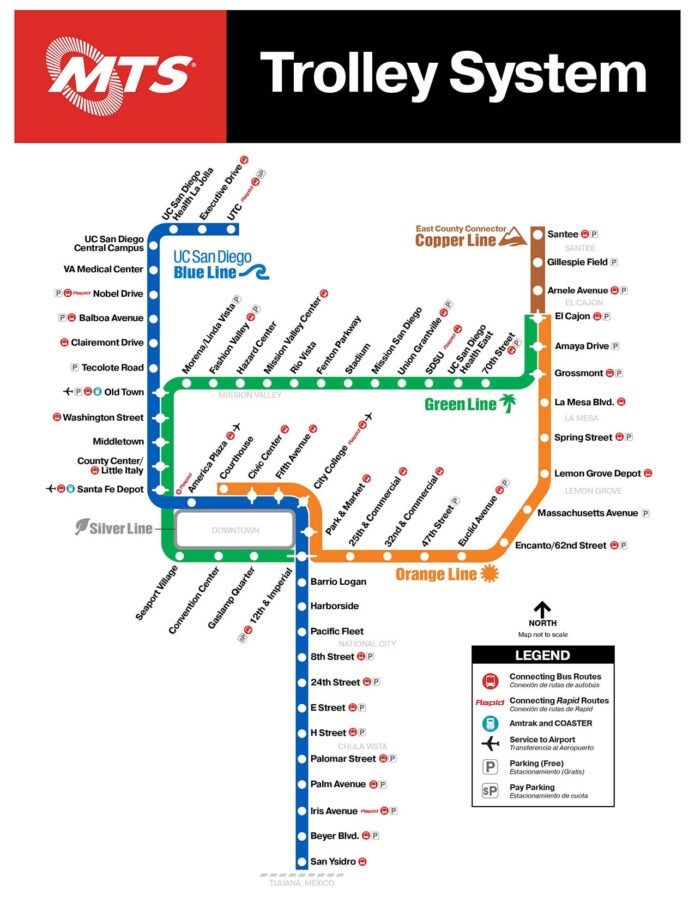
The San Diego Trolley runs three color-coded lines, covering 53 stations. Blue Line goes from San Ysidro at the border through downtown to Old Town. Orange Line links East County to downtown and the waterfront. Green Line serves San Diego State University and meets up at Old Town Transit Center.
It’s $2.50 for a one-way adult fare. If you tap twice in two hours, you’ll automatically get a $6.00 day pass.
Trolleys run every 7-15 minutes during busy times. Nights and weekends, it’s more like every 15-30 minutes. All trolley stations have ticket machines that take cash and cards. You gotta tap your PRONTO card or ticket before you board—don’t forget.
Old Town Transit Center is a major hub for switching between Blue and Green lines and catching buses. Santa Fe Depot downtown links Blue and Green lines, buses, and commuter trains.
Essential Bus Lines for Tourists

Rapid 215 is the one you want for fast trips without a car. It connects key spots along the coast and inland, skipping a lot of stops to get you there quicker.
Bus fare is $2.50 for adults, same as the trolley. Ride twice in two hours, and you’ve got a day pass. Buses usually run every 15-30 minutes, but it depends on the route and time of day.
Route 992 is a lifesaver if you’re flying in—it connects the airport to downtown and the trolley. From either terminal, just hop on and plug into the rest of the network. The MTS trip planner helps you map out connections between buses and trolleys, which I recommend if you’re new in town.
Most buses have bike racks and wheelchair access. Still, check the MTS app for real-time arrivals—delays happen, especially during rush hour.
COASTER, SPRINTER, and Pacific Surfliner Trains
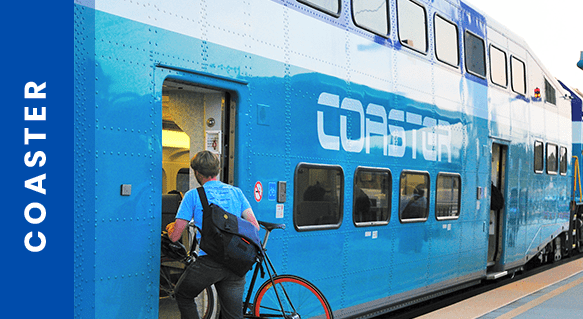
The COASTER commuter train hugs the coast from Oceanside to downtown, stopping in Encinitas, Carlsbad, and Del Mar. It’s honestly a great way to catch coastal views and skip I-5 traffic.
COASTER mainly runs weekdays, with limited service on weekends. A one-way ticket from Oceanside to downtown costs about $5-6, depending on distance. The whole ride takes around an hour.
The SPRINTER is a light rail line running east-west between Oceanside and Escondido, linking up inland communities. You can transfer from the COASTER to SPRINTER at Oceanside Transit Center.
Pacific Surfliner is Amtrak’s coastal train from San Diego up through LA to San Luis Obispo. It stops at Santa Fe Depot and Oceanside, so it’s handy for day trips up the coast. Fares are higher than local transit—think $20-40 to LA, depending on when you book.
Traveling From and To San Diego International Airport
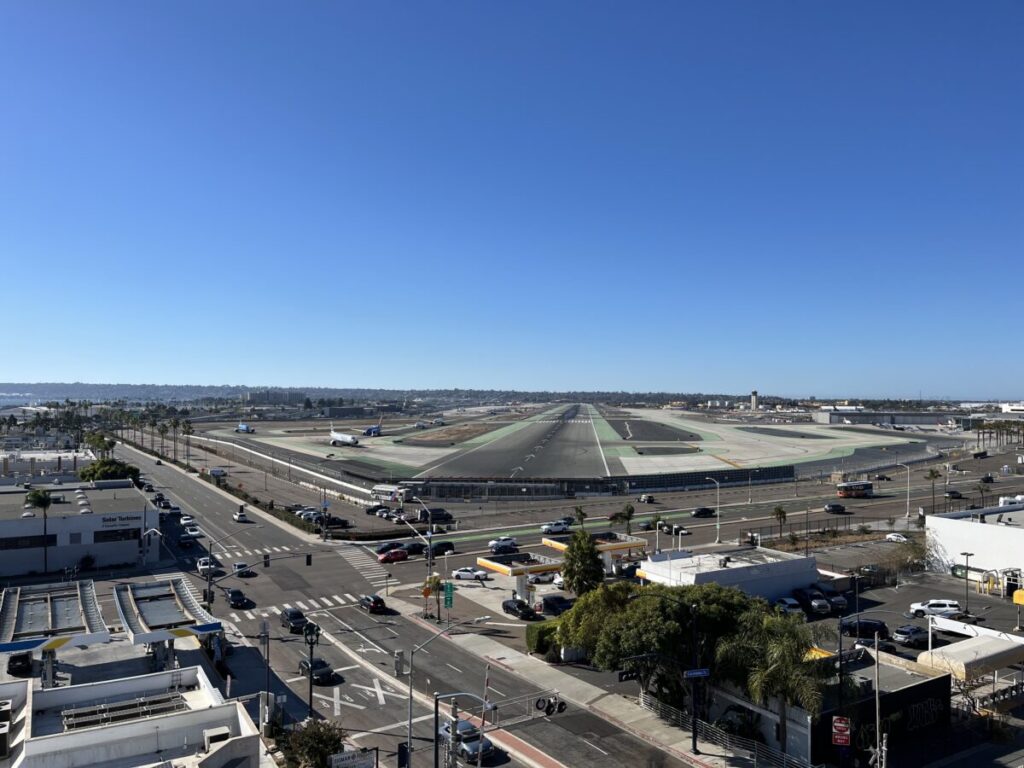
San Diego International Airport sits just three miles from downtown, and you’ve got several good ways to get there without blowing your budget. Public buses go straight to the airport, rideshares pick up at marked spots, and taxis line up outside the terminals.
Airport Public Transportation Connections
MTS Route 992, also called the San Diego Flyer, runs between the airport and Santa Fe Depot every 15 minutes most of the day. It’s free, which is honestly kind of amazing for a big airport.
From Santa Fe Depot, you can plug into the rest of the MTS network and the Blue Line Trolley. Old Town Transit Center is another big hub you can reach via MTS buses, giving you routes heading north along the coast.
If you’re coming from farther out, the COASTER train runs from Oceanside to downtown, stopping at Carlsbad, Encinitas, and Solana Beach. Get off at Santa Fe Depot and catch the Route 992 bus to the airport.
The Pronto app makes paying for buses and trolleys easy. Load money onto a digital card and tap your phone when you board—no fumbling for cash.
Shuttle Services and Rideshares
Rideshare pickups at SAN happen at the Ground Transportation Center on the second level of the parking plaza. It’s not right at the terminals, so you’ll follow signs and walk a bit, but it keeps things moving.
Uber and Lyft both run at the airport every day. Prices jump during busy times or early mornings when flights pile up, so it’s a bit of a gamble.
Some hotels run their own shuttles if you’re staying nearby. Double-check before you arrive—some want advance reservations, others just run on a loop.
Taxis and Car Rentals at SAN
Taxis wait outside both Terminal 1 and Terminal 2 at marked zones. No need to call ahead—just walk out and hop in. Fares to downtown usually run $15-20, but traffic can mess with that.
The airport’s rental car center is a short shuttle ride from the terminals. All the big names are there: Enterprise, Hertz, Budget, and so on. Shuttles run often, so you won’t wait long.
Renting gives you the most freedom to explore San Diego’s neighborhoods and beaches, but parking downtown gets pricey, and I-5 traffic is no joke during rush hour.
Getting Around Downtown and Iconic Neighborhoods

Downtown San Diego and its nearby neighborhoods are surprisingly easy to get around on foot or by public transit. The trolley connects you straight to major attractions, and a lot of areas are compact enough to just wander on foot.
Downtown San Diego on Foot
You can walk most of downtown without breaking a sweat. The core area covers about 16 blocks, and honestly, that’s one of San Diego’s best features. Unlike sprawling LA, downtown here feels made for walking.
Main neighborhoods—Gaslamp Quarter, Little Italy, and the Embarcadero—are all within 20 minutes’ walk of each other. You’ll end up drifting between them as you explore.
Walking shortcuts locals use:
- Cut through Waterfront Park to skip crowded Harbor Drive
- Take Martin Luther King Promenade for a scenic, chill pedestrian path
- Walk through Civic Center Plaza to dodge street traffic
Petco Park is on the east edge of downtown and makes a good landmark if you’re lost. Most attractions cluster west of the ballpark by the water, so your walking routes stay pretty simple.
Gaslamp Quarter, Embarcadero, and Waterfront
The Gaslamp Quarter is the center of downtown nightlife and restaurants. You’ll want to explore this area on foot—it’s just about 16 blocks, and honestly, parking is a pain anyway.
The Embarcadero waterfront runs along the bay from the Convention Center up to the Maritime Museum. It’s an easy, flat walk, with the USS Midway Museum right in the middle. You can’t miss the massive aircraft carrier—it’s literally sitting along the water.
Best way to cover the waterfront:
- Start at the Convention Center trolley stop
- Walk north along the boardwalk (about 1.5 miles total)
- Stop at USS Midway, Seaport Village, and the Maritime Museum
- Catch the trolley back from Santa Fe Depot
The Coronado Ferry leaves from Broadway Pier and gets you to Hotel del Coronado in about 15 minutes. It’s way more fun than driving over the bridge, and you avoid the parking mess entirely.
Reaching Major Attractions by Transit
The MTS Trolley Blue Line cuts right through downtown and connects you to most major spots. A day pass costs $6 and covers unlimited rides on both trolley and buses—way cheaper than parking fees.
Transit connections to top attractions:
| Attraction | Transit Option | Travel Time |
|---|---|---|
| Balboa Park | Rapid 215 bus from downtown | 10 minutes |
| San Diego Zoo | Rapid 215 bus | 15 minutes |
| USS Midway | Blue Line to County Center/Little Italy | 5 minutes walk |
| Petco Park | Blue Line to 12th & Imperial | Direct access |
| Hotel del Coronado | Coronado Ferry from Broadway Pier | 15 minutes |
| Belmont Park | Bus Route 8 or 9 | 25-30 minutes |
The Green Line goes to Old Town and Mission Valley if you’re heading that way. But for downtown and the waterfront, the Blue Line covers most of what you’ll need.
Grab the MTS Go app before you start exploring. It shows real-time arrivals and saves you from standing around guessing when the next trolley will show up.
Alternative Transportation: Ferry, Bikes, and Scooters

San Diego’s waterfront and mild weather make it ideal for exploring by ferry, bike, or scooter. These options let you skip traffic and get a closer look at the bay, beaches, and coastal neighborhoods.
Coronado Ferry and Water Transit
The Coronado Ferry connects downtown San Diego to Coronado Island in about 15 minutes. It runs between Broadway Pier and the Ferry Landing Marketplace, and the views of the bay and skyline are fantastic.
It’s about $5 per person for a one-way ticket. The ferry leaves every half hour most of the day, with more trips during rush hours. You can bring your bike on board for a small fee, which makes it easy to explore Coronado once you dock.
Ferry Landing on Coronado Island has shops and restaurants right where you arrive. From there, you can walk or bike to Hotel del Coronado, the beaches, or just wander the neighborhoods. It’s honestly one of the most scenic ways to get around San Diego—and beats sitting in bridge traffic.
Water taxis also run around the bay if you need to reach certain marinas or waterfront restaurants. They’re pricier but handy for point-to-point hops.
Bike Rentals and Coastal Riding Paths
You’ll find bike rentals all over San Diego, with Wheel Fun Rentals being a popular choice. Their spots are close to big attractions like the Embarcadero, Coronado Island, and Mission Bay.
Rental prices usually start around $10-15 per hour or $30-40 for a full day. You can pick from regular bikes, electric bikes, cruisers, or even those goofy multi-person surreys if you’re feeling adventurous.
The Mission Bay bike path gives you 12 miles of flat, paved trails around the bay. For coastal views, the boardwalk between Pacific Beach and Mission Beach is hard to top. If you’re heading up to La Jolla, expect some hills but also awesome ocean views and a stop at La Jolla Cove.
Most bike paths are well-marked and separated from car traffic. Just a heads-up: electric bikes aren’t allowed on some pedestrian-only areas like parts of the Embarcadero promenade.
Electric Scooters and Shared Mobility
Electric scooters from Lime and Bird are scattered all over downtown, the beach areas, and busy neighborhoods. You unlock them with an app and pay per minute—usually around $0.35-$0.45 plus a start fee.
They’re quick for short hops, but there are restrictions. You can’t ride scooters on sidewalks, promenades, or piers in most places. Stick to bike lanes or streets. The Port of San Diego actually bans motorized scooters from pedestrian areas along the Embarcadero for safety.
Anyone under 18 has to wear a helmet, and you need to be at least 16 to ride. The scooters usually max out around 15 mph, which feels fast enough when you’re buzzing along the bay.
Check the battery level before you start, especially if you’re going far. And yeah, park them in the right zone or risk a fine—nobody likes tripping over a scooter left in the middle of the sidewalk.
Driving, Car Rentals, and Rideshares

Renting a car gives you the most freedom to explore San Diego and the areas around it, but watch out for parking costs and traffic. Rideshares and taxis work well for short trips around downtown.
When to Rent a Car in San Diego
You’ll want a car if you’re planning to visit places spread out across the region. La Jolla, Coronado Island, and the beaches north of the city are much easier to reach when you’re driving yourself.
Most rental agencies have spots at San Diego International Airport and around downtown. You can grab your car right after you land and drop it off before your flight home.
But honestly, if you’re staying downtown and just seeing nearby sights, your car might sit in a garage most of the time. Downtown is walkable, and public transit connects you to major spots like Balboa Park and the Gaslamp Quarter.
Think about your plans before you book. A car makes sense for day trips to Carlsbad, Temecula wine country, or even a quick trip across the border. If you’re planning a beach-heavy trip up the coast, you’ll appreciate the flexibility.
Parking and Traffic Tips
Parking in San Diego can get expensive, especially downtown and near the beaches. Most hotels charge $15-30 per day, and street meters run about $1.25-2.50 per hour.
The best free parking is in residential neighborhoods, but read the signs carefully to avoid permit-only zones. Some beaches like Mission Beach offer free lots, though they fill up fast on weekends.
Traffic gets bad during weekday rush hours on I-5 and I-8. The stretch of I-5 through downtown is basically a parking lot between 7-9 AM and 4-7 PM. Highway 163 through Balboa Park can also jam up.
Beach areas slow down on sunny weekends. Give yourself extra time if you’re driving to Pacific Beach or Ocean Beach on Saturday or Sunday afternoons.
Using Taxis and Rideshare Services
Uber and Lyft run all over San Diego and are usually the cheapest choice for getting around. A ride from the airport to downtown is about $15-20, while La Jolla will run you $25-35.
Traditional taxis are still around but you’ll see fewer of them than rideshares. Taxi stands are at the airport, big hotels, and the train station. They use meters and usually cost more than a rideshare for the same trip.
The airport has dedicated rideshare pickup zones on the second level of Terminal 1 and Terminal 2. Don’t wait at arrivals—follow the signs upstairs to avoid confusion.
Sightseeing Tours and Hop-On Hop-Off Options
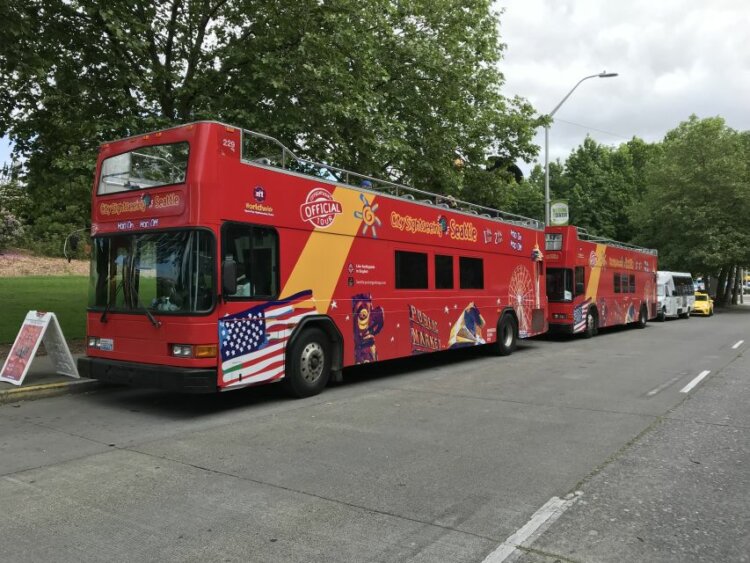
San Diego’s sightseeing tours let you hit the big attractions without worrying about parking or getting lost. The hop-on hop-off style really works here since you can jump off at Balboa Park, grab lunch in Old Town, then catch the next trolley to Coronado.
Old Town Trolley Sightseeing
Old Town Trolley runs a solid tour loop in San Diego, covering 25 miles with 11 stops around the city. The full loop takes about 1 hour and 45 minutes if you don’t get off, but honestly, that’s not the point.
Your ticket lets you hop on and off all day at places like the Gaslamp Quarter, Seaport Village, and Coronado (they’re the only hop-on service that crosses the bridge). The conductors narrate the route with local history and stories, which is way better than staring at your phone trying to figure out what you’re seeing.
You’ll pass over 100 points of interest. The trolley comes by each stop often, so you’re not stuck waiting forever if you want to explore Balboa Park or check out the USS Midway. They hand out a free map at any ticket booth with all the stops, making it easy to plan your day.
Ticket booths are at Old Town, Embarcadero, Seaport Village, Gaslamp Quarter, and Coronado on Orange Avenue. Start at whichever works for you.
Hop On Hop Off Bus Experiences
The open-top bus tours give you the same flexibility as the trolleys, but with a different feel. Most companies offer one-day or two-day passes depending on your schedule.
These buses are great if you want to make up your own route. Maybe you spend a couple hours at Belmont Park riding the old wooden roller coaster, then hop back on to hit Little Italy for dinner.
The live guides point out things you’d probably miss—hidden murals, cool architecture, or local restaurants worth checking out. And riding around in the open air just feels right in San Diego’s weather.
Most passes include discounts at attractions along the way. If you’re planning to visit the San Diego Zoo or other ticketed spots, the savings can make the bus pass worth it just for the deals.
Tourist Shuttles and Group Tours
Some hotels and attractions run their own shuttles to popular spots, though these usually follow fixed schedules instead of true hop-on hop-off access. You’ll see these connecting downtown hotels to Balboa Park, beaches, and museums.
Group tours offer more structure if you’d rather let someone else handle the details. These usually focus on certain themes—breweries, coastal scenery, or history. The trade-off is you’re stuck with the group’s timing.
Private tour companies run smaller shuttles, which work well for families or small groups wanting a custom route. You’ll pay more per person, but you get to skip the stops you don’t care about and spend longer where you actually want to be.
Frequently Asked Questions
San Diego visitors tend to have similar questions about getting around, from picking the right trolley line to finding affordable ways to reach big attractions like the zoo.
What is the best mode of public transportation for tourists in San Diego?
The trolley system is probably your best bet for getting around San Diego’s main attractions. The three lines cover most of the places you’ll want to see, and honestly, they’re way more reliable than trying to figure out bus schedules when you’re new to the area.
The Blue Line takes you from Downtown through Old Town, which is great if you’re staying central. The Orange Line heads east toward spots like Lemon Grove. The Green Line runs through Mission Valley and passes by San Diego State University.
Buses fill in the gaps where trolleys don’t reach. SDMTS runs 89 different routes, so chances are, there’s a bus that’ll get you close to wherever you’re headed. I usually mix trolleys and buses for the most flexibility—no rental car needed.
Where can I find a comprehensive map of the San Diego Trolley system?
You’ll find the most up-to-date trolley maps and schedules on the SDMTS website. Their trip planning tool is actually handy—just type in your destination, and it’ll show you the fastest combo of trolleys or buses.
You can also pick up physical maps at any trolley station or visitor information center. They’re nice to have in your pocket, especially since cell service can be spotty underground or in some neighborhoods.
Are there any free transit options available in San Diego?
The Big Bay Shuttle runs along the Embarcadero waterfront between Memorial Day and Labor Day with an all-day pass. It’s not really free, but you can hop on and off as much as you want for one price.
Otherwise, San Diego doesn’t offer free public transit. You’ll need to pay for trolley and bus rides, but fares are pretty reasonable compared to taxis or rideshares. Walking, of course, is free—and Downtown San Diego is more walkable than most Southern California cities.
What are the most convenient transportation options near the San Diego Zoo?
The zoo sits in Balboa Park, and you can get there by taking the Blue Line or Green Line trolley to a nearby station. From there, catch a bus or walk about 15-20 minutes, depending on which station you end up at.
The Old Town Trolley tour stops right at the San Diego Zoo, so if you have a pass, that’s probably the easiest way. Hop off, spend as long as you like at the zoo, then hop back on when you’re ready to move on.
If you drive or take a taxi, there’s paid parking at the zoo itself. But parking fills up fast on weekends and during peak season, so I’d lean toward public transit or the tour trolley instead.
What are the best areas to stay in San Diego for visitors without a vehicle?
Downtown San Diego probably gives you the most freedom if you don’t have a car. You can walk to the Gaslamp Quarter, Little Italy, and the waterfront, and all three trolley lines are right there if you want to roam farther out.
Old Town’s another good pick. It’s a big transit hub where the Blue and Green Lines cross, so you can get around the city pretty easily. Plus, there are plenty of restaurants and historical spots you can check out on foot.
Staying along the trolley lines—Mission Valley, or spots near South Bay stations—can work too, as long as your hotel’s close to a station. Nobody wants to drag their suitcase for blocks, right?


