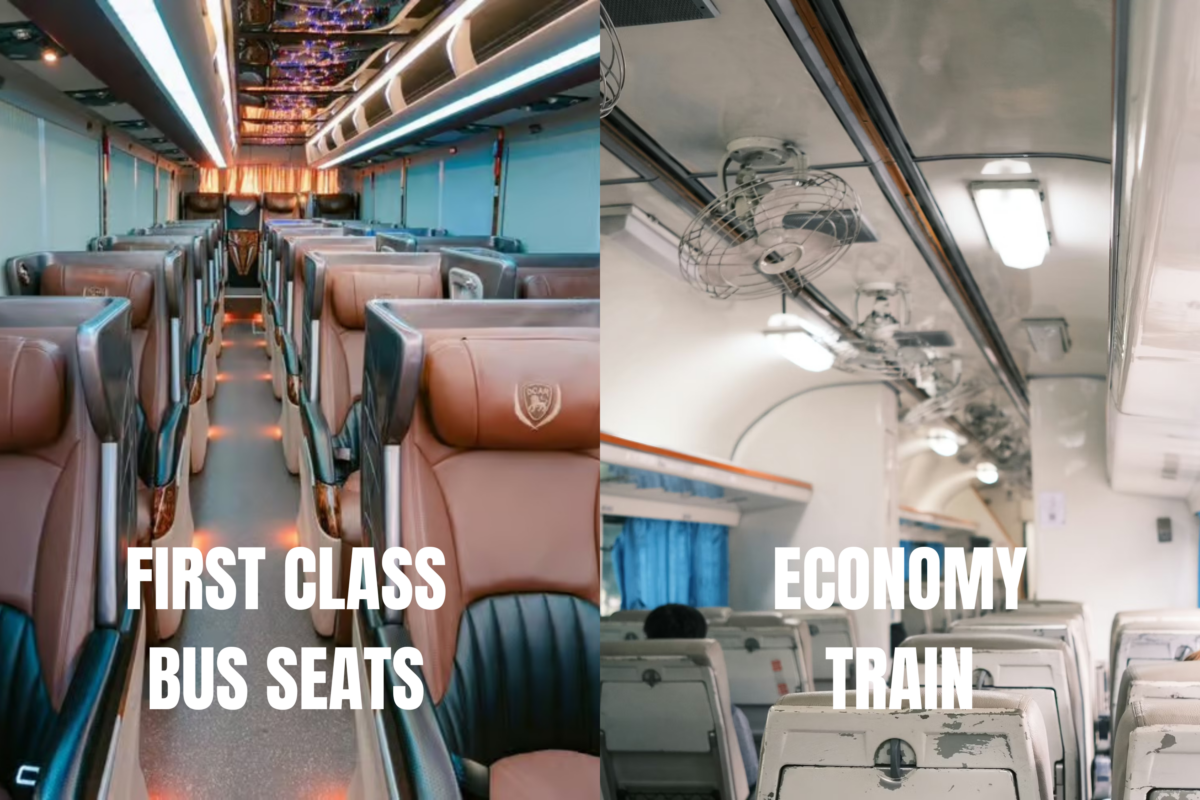
I’ve logged a lot of miles on both buses and trains across the country, and honestly? Comparing first class bus seats to economy train is a bit like apples and oranges—they’re different, but both get the job done. The real question is which one actually fits your trip. First class bus seats usually mean more personal space, privacy, extra legroom, reclining seats, and sometimes your own entertainment system. Economy train seats, on the other hand, let you move around more and access dining cars, but you give up some personal space. So, it comes down to your trip length, budget, and whether you’d rather stay comfy in one spot or have room to wander.
If you’re planning a long-distance trip and can’t decide between splurging on first class bus or sticking with economy train, it helps to know what you’re actually paying for. Both have their perks, and honestly, what makes sense for a short ride might not work for an overnight trek. I’ve definitely learned that the hard way.
Key Takeaways
- First class bus seats give you more personal space and privacy; economy trains offer more freedom to move around
- Pricing swings a lot depending on the route and when you book—sometimes economy train is even cheaper than budget bus tickets
- Go for first class bus if you want a comfy, direct ride, or pick economy train if you want dining options and space to stretch your legs
Key Differences Between First Class Bus Seats and Economy Train
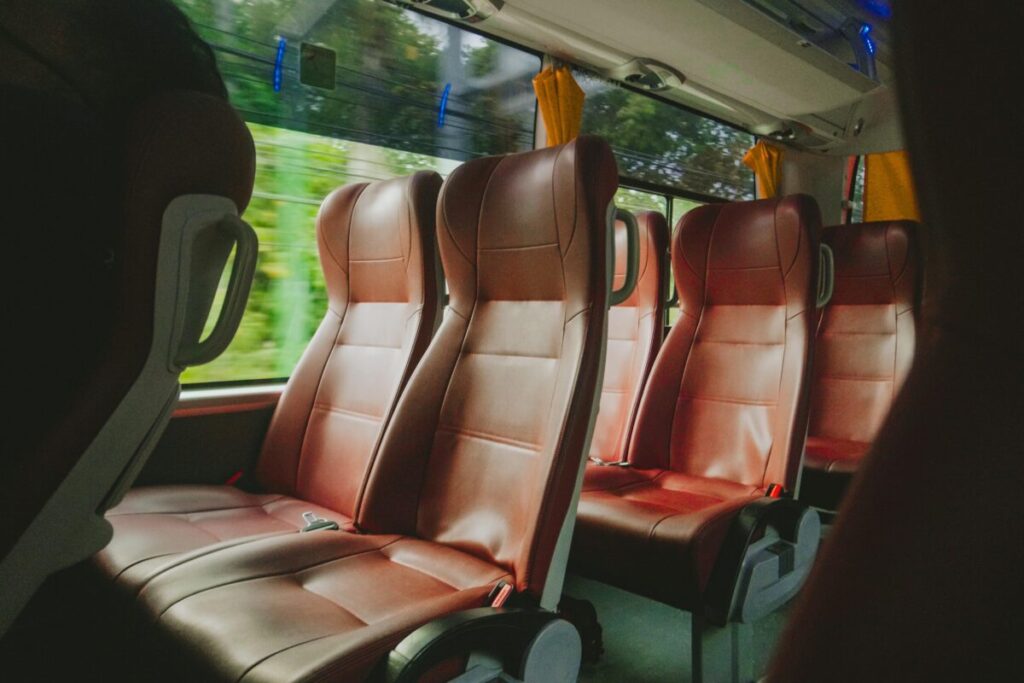
The experience you get on first class buses and economy trains is pretty different when it comes to comfort, seating, and space. It’s not just about price—how you feel during the trip really changes.
Comfort Levels
First class bus seats use better materials and extra padding you just don’t get in economy train seats. You’ll notice right away—most bus seats recline way more than train seats, sometimes almost flat.
Economy train seats are more about efficiency than luxury. They’re upright, firmer, and you don’t get much cushioning. Compared to a first class bus, they feel a bit stiff.
Most first class buses throw in personal amenities like your own power outlet, USB port, or even a little entertainment screen. On trains, you might have to share outlets or hunt for them in another car. The seat fabric matters too—first class bus seats often come in leather or soft fabric; economy train seats stick to basic, easy-to-clean stuff.
Seating Arrangements
This is where things really start to split. First class buses often use a 2-1 layout—two seats on one side, one on the other. You get more privacy, and it feels less crowded.
Economy trains usually pack people in with a 2-2 or 3-2 setup. You’re sitting closer to strangers, and during busy times, it can get pretty cramped.
First class bus seats tend to have adjustable armrests, footrests, and your own reading light. Economy train seats? Fixed armrests and overhead lights for everyone. If you like having control over your space, the bus wins here.
Space and Legroom
This one’s huge. First class bus seats give you way more legroom—think 38 to 42 inches of seat pitch. Economy trains usually offer 30 to 34 inches.
Your knees won’t hit the seat in front of you on a first class bus, and you can actually stretch out or use a laptop comfortably. On trains, especially if you’re tall, you might have to keep your legs tucked in.
First class buses also have wider seats, around 20 to 22 inches, compared to 17 to 19 on economy trains. That extra width really matters on long rides. The aisles are usually wider on buses too, so you’re not bumping into everyone as you move around.
First Class Bus Seats: Features and Amenities
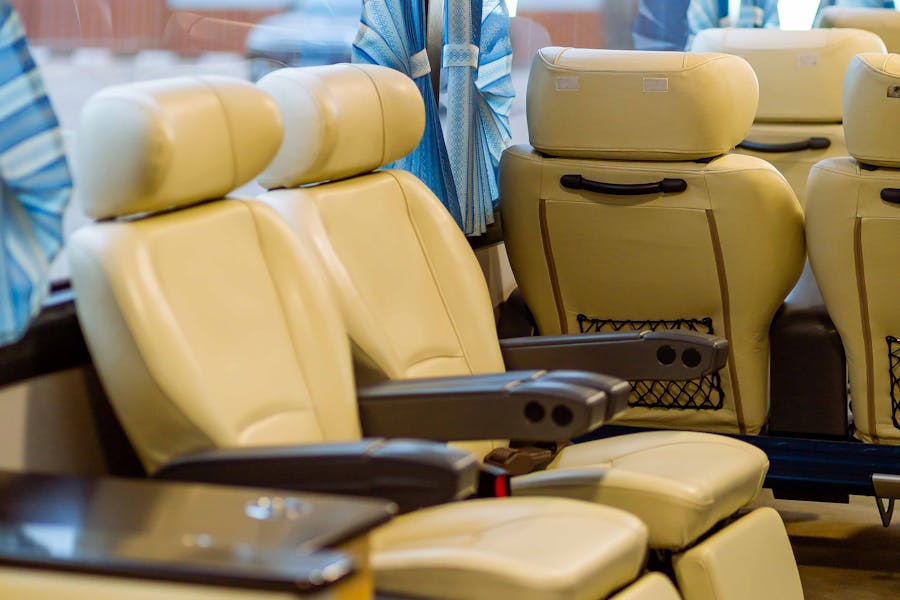
First class bus seats come with wider seating (about 21 inches), a deep recline (up to 140 degrees), and footrests that make it feel more like your living room than a bus ride.
Seat Types and Adjustability
You get roughly 21 inches of seat width—about five inches more than premium economy. The seats recline almost flat, so you can lean back without worrying about bothering the person behind you.
Most seats use leather or high-quality fabric. You can tweak the armrests and adjust the headrest to actually support your neck. The footrest isn’t just a metal bar—it adjusts so your legs can actually relax.
Some seats face forward, others backward, depending on the company. What matters is the recline is smooth and quiet, not the kind that makes everyone stare at you.
Personal Space Enhancements
First class gives you a lot more space to stretch out. The wider seats mean you’re not shoulder-to-shoulder with your neighbor, which feels pretty great on a long trip.
You usually get your own power socket (sometimes a USB port too), so you’re not fighting for outlets or watching your phone die halfway. Individual reading lights are standard, and the tray table actually supports a laptop. Some seats even have partial dividers for a bit more privacy.
Additional Services Offered
First class tickets often come with free drinks and snacks—not fancy, but at least you’re not paying for water. Wi-Fi is included and usually a bit faster than economy, but it still depends on the route.
Priority boarding is sometimes included, so you’re not stuck in line. The restrooms in first class get cleaned more often and are usually separate from the main bus bathroom.
Some companies throw in extras like charging stations for bigger devices, blankets, or even noise-canceling headphones. There’s more storage above your seat, so you don’t have to cram your carry-on in sideways.
Economy Train Seats: What to Expect
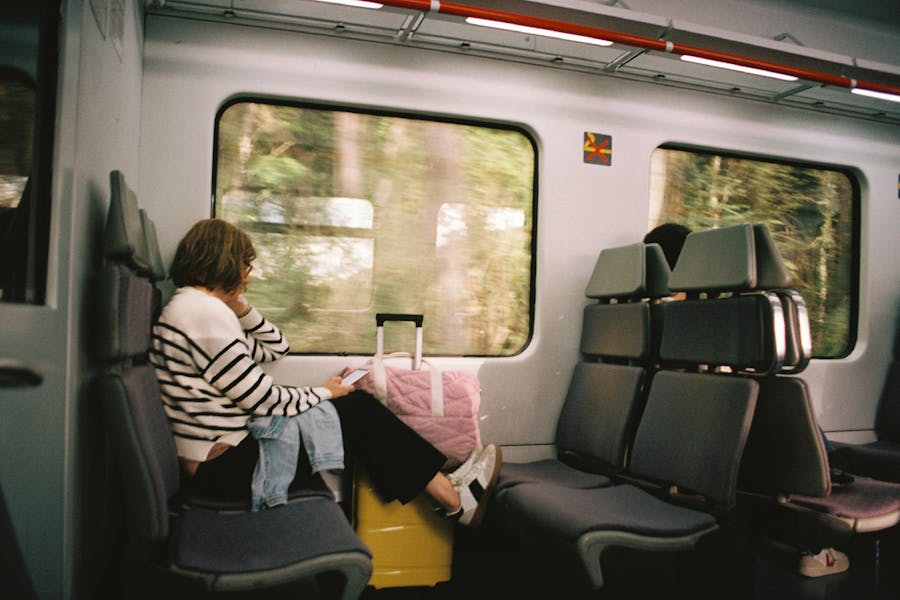
Economy train seats are pretty basic but get you where you need to go. You’ll have enough room to sit comfortably, but don’t expect a lot of bells and whistles.
Typical Economy Train Layouts
Most economy trains use a 2-2 layout—two seats on each side of the aisle. You’ll see rows of forward-facing seats, but sometimes there are a few that face backward or have a table in between.
Seats usually have a small recline and measure about 18-21 inches wide. Legroom is around 31-34 inches, which is fine for most people but can feel tight on long trips. Each car fits 60-80 passengers.
Your seat will have a basic armrest and a tray table that folds down from the seat in front. Many trains now offer power outlets nearby, but some older cars don’t. Overhead racks run the length of the car for your bags.
Compartments and Shared Spaces
Most economy train cars are open-plan, so everyone shares one big space. This makes it easy to move around and enjoy the view. Some European trains still use closed compartments, but that’s rare in North America.
Many trains have a quiet zone where you’re supposed to keep noise down—perfect if you want to read or nap in peace.
Restrooms are usually at the ends of each car, and you’ll find one or two per carriage. Bigger trains have a café car for snacks and drinks, but you’ll need to walk to get there.
Essential Amenities
Your economy train ticket covers the basics. Most trains offer free WiFi, but it’s hit or miss in tunnels or the countryside. Food and drinks aren’t included—bring your own or buy something from the café car.
No footrests or major lumbar support here, but there’s enough space to use a laptop or read. The temperature is set for the whole car, so bring a sweater—there’s no way to change it at your seat.
Window shades help block sunlight if you need. Emergency gear and first aid kits are tucked away throughout the car for safety.
Comparing International Options and Premium Upgrades
International train travel gets interesting, with premium tiers that can rival airlines—think Europe’s high-speed trains or China’s bullet trains and overnight sleepers. Prices and services vary a ton, but you’ll get more space and better service than standard seating.
Europe: ICE, Intercity, and Railjet

European rail operators have really figured out first-class travel without making it feel uptight. Germany’s ICE trains give you wider leather seats, free meals at your seat, and access to DB Lounges at big stations. You get about 50% more legroom than second class, which makes a big difference on those four-hour rides.
The Railjet service between Austria, Germany, Hungary, and Switzerland steps it up with individual entertainment screens, a power outlet at every seat, and waiters who’ll bring your coffee or beer right to you. I took one from Vienna to Munich last year, and the seats actually reclined enough for a real nap.
Standard Intercity trains across Europe offer a more low-key first-class experience. Expect roomier seats and quieter cars, but don’t count on meal service or fancy lounges. The price jump from second to first class is usually €20-50, which isn’t bad if you really want the extra space.
China Bullet Train Choices

China’s high-speed trains give you three main classes: second, first, and business. Second class packs people in with a 2-3-2 layout. First class drops to 2-2, and the seats are way nicer.
Business class is where things get interesting—fully reclining seats that almost turn into beds, free meals, and fancy waiting lounges at major stations. The Shanghai-Beijing route charges about three times the second-class fare for business, but you’re looking at $200 vs $60 for a 4.5-hour trip at 350 km/h.
The trains themselves are super clean and on time, no matter which class you pick. But if you’re going long-distance, like Guangzhou to Harbin, the upgrade starts to feel worth it.
Business Class and Roomettes on Trains
Overnight trains let you book private sleeping compartments called roomettes that completely change the travel equation. Amtrak’s roomettes fit two people with seats that convert into beds. You also get included meals in the dining car and access to a private bathroom down the hall.
European night trains like the Nightjet have single, double, or triple occupancy compartments. You’re paying €100-200 per person depending on the route, but that covers both your ride and your hotel for the night. The beds are narrow, though—I’m 6’2″ and my feet definitely hung off the edge.
Some Asian operators take sleeper service even further. Thailand’s overnight trains to Chiang Mai offer business class sleeper cabins with ensuite bathrooms and breakfast service. Japan’s Sunrise Express has tiny but efficient solo rooms with fold-down beds, and honestly, it feels like staying in a very organized closet.
Ticket Pricing and Value Considerations

First class bus tickets usually cost less than first class train tickets but offer similar comfort. Sometimes, you can upgrade economy train fares to first class for just 10-20% more on certain routes. That’s not bad at all.
Cost of First Class Bus Tickets
First class bus travel typically ranges from $30 to $80 for mid-distance routes, depending on the operator and what’s included. You get premium features like extra legroom, power outlets, and Wi-Fi without the huge markup you’d see with other travel modes.
The beauty of first class bus pricing is its consistency. Unlike airlines or trains where first class tickets can jump to three times the economy price, buses keep things reasonable—most operators charge about 30-50% more than standard seats for their premium options.
Your money actually gets you something, too. Those extra dollars buy you guaranteed seat selection, priority boarding, and often snacks or drinks. Some luxury bus services even throw in checked baggage for free, which is a nice perk compared to budget airlines nickel-and-diming you for every little thing.
Economy vs First Class Train Ticket Prices
Economy train tickets are the most budget-friendly rail option, but sometimes the gap between economy and first class isn’t as wide as you’d expect. On some routes, upgrading costs only 10-20% more than standard fare.
But here’s the catch: First class train tickets on popular routes or premium services like Amtrak can go over $1,000, especially for longer journeys with sleepers. That’s a huge jump from economy pricing.
The value really depends on your route and timing. Sometimes you’ll find first class train deals that make the upgrade worth it. Other times, you’re paying 3-5 times more just for a bigger seat and maybe some complimentary coffee.
Who Should Choose Which: Traveler Profiles
First class bus seats work better for people who want workspace and comfort on longer trips, while economy train tickets make more sense if you’re watching your budget or traveling shorter distances with family.
Business Travelers and Frequent Commuters
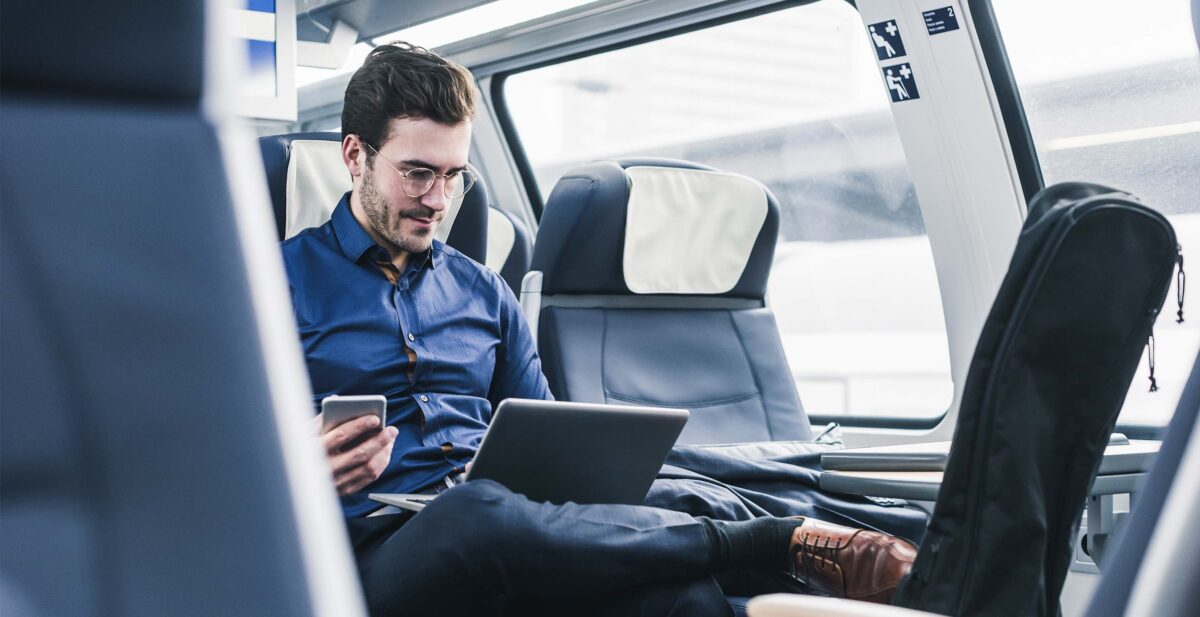
If you commute to work several times a week or travel for business, first class bus seats give you the space to actually get things done. The wider seats mean you can open your laptop without elbowing your neighbor, and most first class bus sections have power outlets at every seat.
You’ll appreciate the quieter environment, too. First class sections usually have fewer passengers and stricter quiet policies, so you can take calls or focus on that presentation without constant interruptions.
Having a guaranteed seat reservation is a big plus. You don’t waste time hunting for a spot during rush hour, and you can plan your work schedule around reliable departure times. Plus, many first class bus services let you board early, so you’re not stuck in line when you could be settling in and checking your email.
Economy trains can work for short commutes under 30 minutes, but the crowded conditions and lack of workspace make it tough to stay productive during longer rides.
Families and Budget-Conscious Travelers
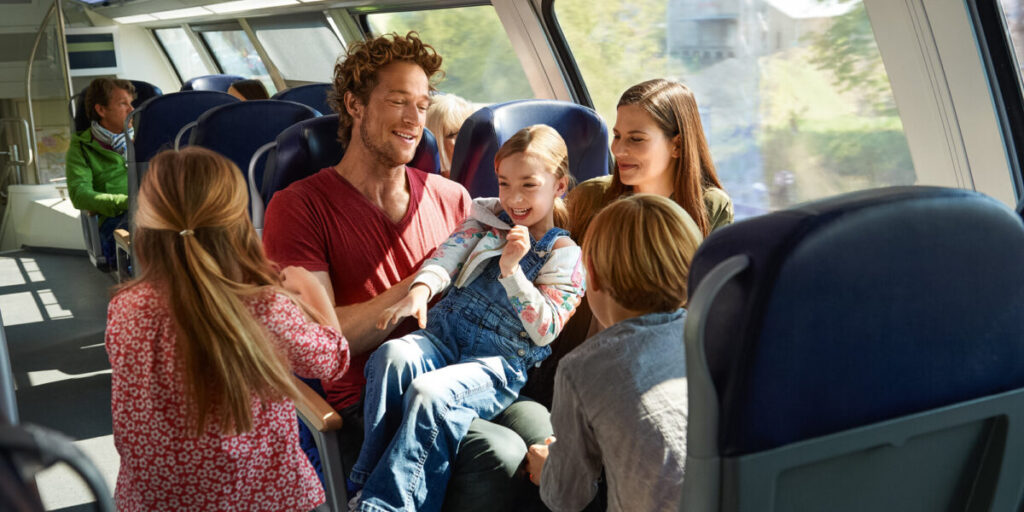
Economy train tickets are usually your best bet when you’re traveling with kids or trying to stretch your travel budget. The cost difference adds up fast when you’re buying tickets for a whole family, and trains often run more frequently than premium bus services.
Kids actually do better on trains in a lot of cases. They can move around more, use the bathroom whenever, and the changing scenery through those big windows keeps them entertained. And honestly, when your toddler has a meltdown, the crowded train feels less awkward than a quiet first class bus section.
Train stations are usually in city centers, which saves you money on taxis or rideshares at both ends of your trip. You’re not paying extra for comfort you might not even use if your kids need your attention the whole time anyway.
But if you’re traveling solo on a budget and the trip is over three hours, those first class bus seats start looking pretty tempting despite the higher price. Your back will thank you.
Frequently Asked Questions
Price differences vary by route and season, but first class bus tickets often cost less than you’d expect while offering comfort that’s pretty comparable to train travel. Both options come with trade-offs in amenities and travel time that depend on your specific route.
What are the price differences between first class bus seats and economy train tickets?
First class bus seats usually cost 20-50% more than standard bus fares. Economy train tickets generally fall somewhere in the middle of that range.
The actual price gap depends a lot on your route and when you book. I’ve seen first class bus seats priced lower than economy train tickets on popular routes, especially if you book a few weeks out. Train prices can jump during peak travel times.
Bus companies tend to keep pricing more consistent throughout the week. Trains often have complicated fare structures that change based on time of day and how far in advance you buy.
What amenities are offered in first class bus seating compared to economy class on a train?
First class bus seats usually include extra legroom, wider seats, and power outlets at every seat. You’ll often get complimentary WiFi, snacks, and drinks included in your ticket price.
Economy train seats give you basic seating and some legroom. Trains generally let you move around the cabin and walk to different cars, but the seat-specific amenities are minimal.
The bus advantage is that everything comes to you. You get a dedicated seat with your amenities built in. On trains, you might need to walk to the cafe car for food or hunt for an outlet.
How do comfort and convenience compare between bus first class and train economy seats?
First class bus seats recline further back than economy train seats, sometimes up to 140 degrees. You get about 36-40 inches of legroom on a first class bus, compared to 31-34 inches in train economy.
The seats themselves are usually leather or premium fabric on first class buses. Train economy seats are functional but not exactly luxurious. One thing, though—trains don’t deal with road vibrations, so the ride feels smoother even in economy.
Buses make regular rest stops every 2-3 hours. Trains let you get up and move whenever you want. It really depends if you prefer staying in one comfy seat or having the freedom to roam in a more basic one.
Are there any significant travel time differences between traveling by first class bus and economy train?
Trains usually get you there faster when both options are available. You might see a train finish a trip in about 3 hours, while a bus could take anywhere from 4 to 5 hours for that same journey.
But honestly, buses reach smaller towns and out-of-the-way places that trains just ignore.
Sometimes, a direct bus saves you the headache of train transfers, even if the ride itself takes a bit longer.
Traffic jams can really slow buses down, especially during rush hour. Trains, running on their own tracks, mostly avoid those delays and tend to stick to the schedule. Weather can mess with both, but trains usually handle snow and rain a little better than buses.


