
Tour Overview
Leave a Review!
Other Top-Rated Tours in Algarve
Explore Other Travel Guides & Reviews
The Algarve’s interior hides secrets that most beach-lovers never stumble upon. While crowds flock to the coast, the region’s real spirit lives in places like Silves—rust-red castle walls, Moorish legends, echoes of old battles. A full-day bus tour from Silves winds you through centuries of history, twisting mountain roads, and villages that don’t look anything like the glossy beach towns in travel ads.
I’ll admit it—I used to roll my eyes at bus tours, thinking they were for folks who just didn’t want to bother planning. But this route? It honestly changed my mind. You’ll check out Silves Castle, climb up to Fóia in the Monchique Mountains, and wander towns where time seems to slow down.
The beauty is simple: someone else drives while you watch cork forests and whitewashed villages roll by. And you end up learning bits about Moorish architecture and local customs that guidebooks usually skip.
Key Takeaways
- Bus tours from Silves dive into Moorish history and mountain scenery most travelers never see
- The route covers Silves Castle, Monchique villages, and sweeping viewpoints high in the hills
- Guides share local insights and handle the logistics so you can just relax and enjoy
What to Expect on a Historical Algarve Bus Tour

Most historical Algarve bus tours from Silves last a full day and take you to some of Portugal’s most fascinating spots—ancient castles, mountain peaks, even coastal fortresses. You’ll ride in air-conditioned comfort while a local guide shares stories about the region’s Moorish roots and seafaring past.
Typical Itinerary Overview
Your day usually starts in Silves, the old Moorish capital that once ruled the Algarve. You’ll get about an hour here to explore the region’s biggest castle and peek into the ancient cathedral. If you’re into authentic Portuguese goods, the local market’s worth a quick look.
After that, most tours climb up into the Serra de Monchique mountains toward Fóia, which sits at 902 meters and delivers views that’ll have you snapping photos nonstop. It’s cooler up here—even in summer—so toss a jacket in your bag.
In the afternoon, you’ll move west to Lagos, where you can check out historic churches and the old slave market. Then it’s on to Sagres and Cape St. Vincent, where Europe ends in sheer cliffs above the Atlantic. Portuguese navigators once thought this was the edge of the world, and honestly, standing there, it makes sense.
Duration and Daily Schedule
Block out 6 to 8 hours for the whole experience. Most tours leave between 8:00 and 9:00 AM from pickup spots all over the Algarve, including hotels in Albufeira, Portimão, and other big towns.
You’ll have enough time at each stop—Silves gets about an hour, Monchique around 45 minutes, and Lagos usually gets at least an hour to wander. There are photo stops at scenic overlooks, especially at Fóia, where you’ll want a few extra minutes for the views.
Lunch isn’t usually covered in the base price, but your driver will pull over at places with plenty of options. Some tours plan a lunch break at a local spot in Monchique or Lagos, so you can try some classic Portuguese dishes.
Type of Bus and Comfort Levels
You’ll ride in an air-conditioned coach or minibus, depending on how many people are in your group. Full-day trips usually use standard tourist buses with comfy seats and decent legroom. For smaller groups, you might get a 9-seater minibus, which feels more personal and makes it easier to chat with your guide.
The buses have big windows for sightseeing, which is perfect for those winding roads up to Fóia. Most have reclining seats and overhead space for your stuff.
There aren’t restrooms on board, but the itinerary includes regular stops where you can use facilities. The roads through Monchique twist a lot, so if you get carsick, try to sit up front.
Starting in Silves: Moorish History and Charms
Silves stands as the Algarve’s most important Moorish stronghold. Red sandstone walls and narrow lanes whisper stories from centuries ago, with the castle looming over a town where Portuguese life still unfolds at its own pace.
Silves Castle and Its Moorish Legacy
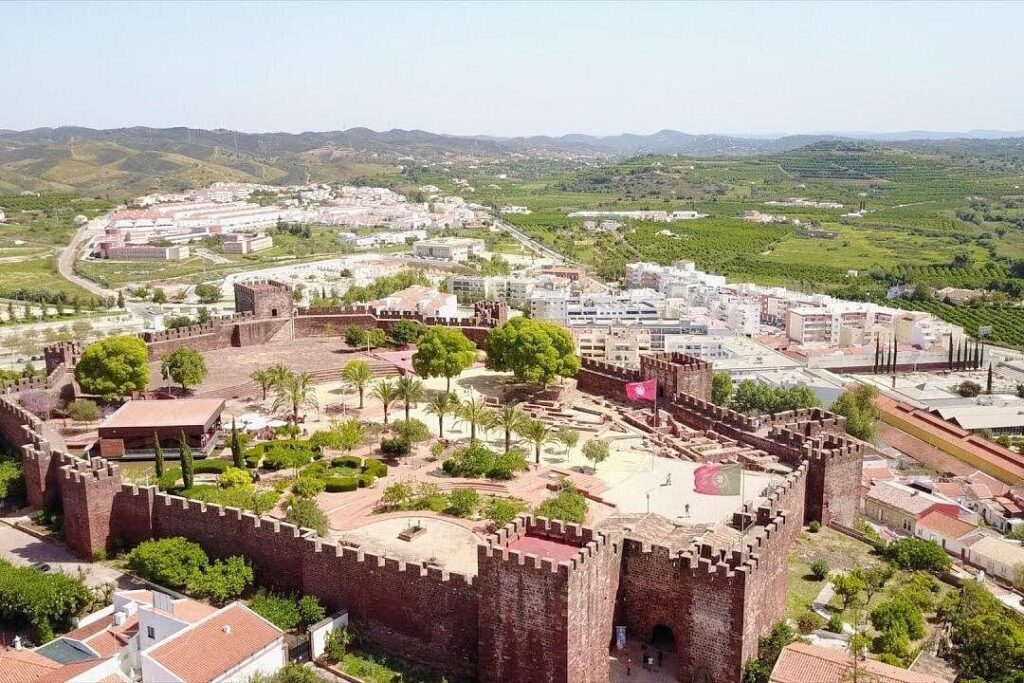
The 11th-century Silves Castle rises above the town in deep red sandstone, glowing especially at golden hour. It’s one of Portugal’s best-kept Moorish fortresses, honestly outshining many others.
You can stroll the ramparts and look through arrow slits where soldiers once watched for invaders. The views stretch across the valley to distant hills, showing exactly why the Moors picked this spot for their capital. Inside, cisterns once stored water for sieges, and archeologists have found pottery and coins from the Islamic era.
Back when Silves was called Xelb, it was the cultural heart of the Algarve, even more important than Lisbon at the time. The castle switched hands several times during the Reconquista, finally falling to Christian forces in 1249.
Exploring the Cobblestone Streets
The cobblestone streets below the castle wind through the old town in patterns that haven’t changed much in centuries. Your bus tour usually gives you some free time to wander these lanes yourself.
Small whitewashed homes line the narrow paths, many with classic azulejo tiles on their fronts. You’ll spot locals chatting in doorways, cats stretched out in the sun. The streets get steep—wear comfortable shoes, since those cobbles can be a little slick.
Look for shops selling cork goods, ceramics, and local honey. The Market Municipal sits by the river, with vendors offering fresh produce and regional treats. But it’s the quieter backstreets that show off the town’s real character, well away from the tourist crowds.
Silves Cathedral and Local Culture

The Silves Cathedral stands where a mosque once stood, built in the 13th century after the Christian conquest. It’s a Gothic building with simple lines and a fortress-like look—almost like the times it was built in left a mark on the walls.
Inside, you’ll find carved stone columns and religious artifacts from different centuries. The cathedral’s not as flashy as some others, but there’s something appealing about that simplicity. The tomb of King João II is here, even though he died elsewhere.
Cafés spill out onto little squares around the cathedral, perfect for grabbing a bica (Portuguese espresso) and watching daily life go by. Silves moves slower than the coast—people take long breaks, and shops might close for lunch without warning.
Panoramic Algarve: Journey Through the Monchique Mountains
The Monchique Mountains feel like another world compared to the Algarve coast. Winding roads climb through eucalyptus and cork oak forests. You’ll get wide-open views from the region’s highest peak and a taste of mountain living in villages most visitors never see.
Reaching Fóia: The Highest Point in the Algarve

Fóia stands at 902 meters, the Algarve’s tallest peak. The bus climbs up narrow roads, and you’ll notice the air cools off as you go. On clear days, you can see all the way to the Atlantic on one side and the Serra de Monchique on the other.
Most tours pause for about 40 minutes at the summit. That’s enough time to wander the viewpoint, snap a few photos, and check out the little shops selling local goods. But here’s the thing—fog rolls in pretty often, especially in the mornings. Some travelers get unlucky with the weather, so if clear views matter to you, maybe peek at the forecast before booking.
The views are worth it, though. You’ll spot terracotta rooftops scattered in the valleys and farmland patchworking across the hills. Even in summer, it’s breezy—bring a jacket.
Nature Trails and Scenic Vistas
The Monchique Mountains aren’t just about Fóia’s summit. Several walking trails snake through thick forests and past bubbling springs. Most tours skip actual hikes, but if your bus stops along the way, you’ll see why this area feels so different from the coast.
The drive between Silves and Monchique flashes by old water mills and stone houses tucked into the hillsides. You’ll pass tiny hamlets where locals still farm with old-school methods. The landscape shifts from scrubby Mediterranean to dense woodland as you climb.
Some tours pull over at roadside viewpoints, letting you stretch your legs and catch the scenery. Honestly, these stops sometimes offer better photo ops than Fóia itself, which can get crowded.
Discovering Local Flavors at Mountain Villages
Monchique town sits lower than Fóia but oozes character. A tree-lined square anchors the village, surrounded by cafes and shops selling regional products. You’ll find medronho, a strong spirit made from arbutus berries that grow wild here. Many people try it at tasting stands, though it’s, uh, not for everyone.
Shops brim with local honey, cork goods, and handmade textiles. The mountain air and cooler weather shape the food—think hearty stews and grilled meats over seafood. If you’ve got free time, grab a bolo de mel (honey cake) at a bakery.
Some buses swing through Caldas de Monchique, a spa village known for its thermal springs. Most facilities are private now, but you can still check out the old architecture and see why it was a retreat spot long ago.
Beyond Silves: Unforgettable Stops Along the Route
Most bus tours from Silves head west to show off the Algarve’s jaw-dropping coastline, historic ports, and wild cliffs that dive into the Atlantic. You’ll hit lively beach towns, explore old forts, and stand at the literal edge of Europe.
Charming Towns: Visiting Albufeira
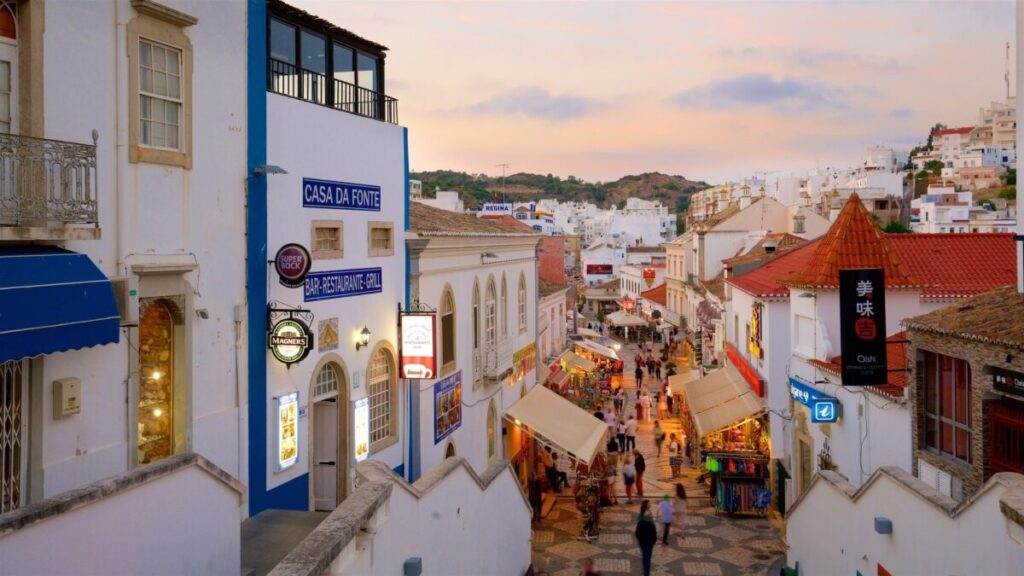
Albufeira brings a burst of energy after Silves’ mellow medieval vibe. Once a fishing village, now a resort town, it sits on golden cliffs above a busy marina and beach. You’ll probably get dropped off in the old town, where narrow cobbled lanes twist between whitewashed buildings with those classic terracotta roofs.
The main square’s a great spot to wander. Cafes spill onto the pavement, and you can sip a bica while people-watching.
Here’s a fun fact—Albufeira was rebuilt after the 1755 earthquake wiped out much of the original town. So what looks ancient is often from the 18th or 19th century. The real charm isn’t about the age, but how locals have kept that traditional Algarvian feeling alive, even with all the tourists.
Your bus will probably give you about 45 minutes here. That’s just enough to wander the main streets and maybe pick up a souvenir or two.
Unique Sights at Lagos and Sagres
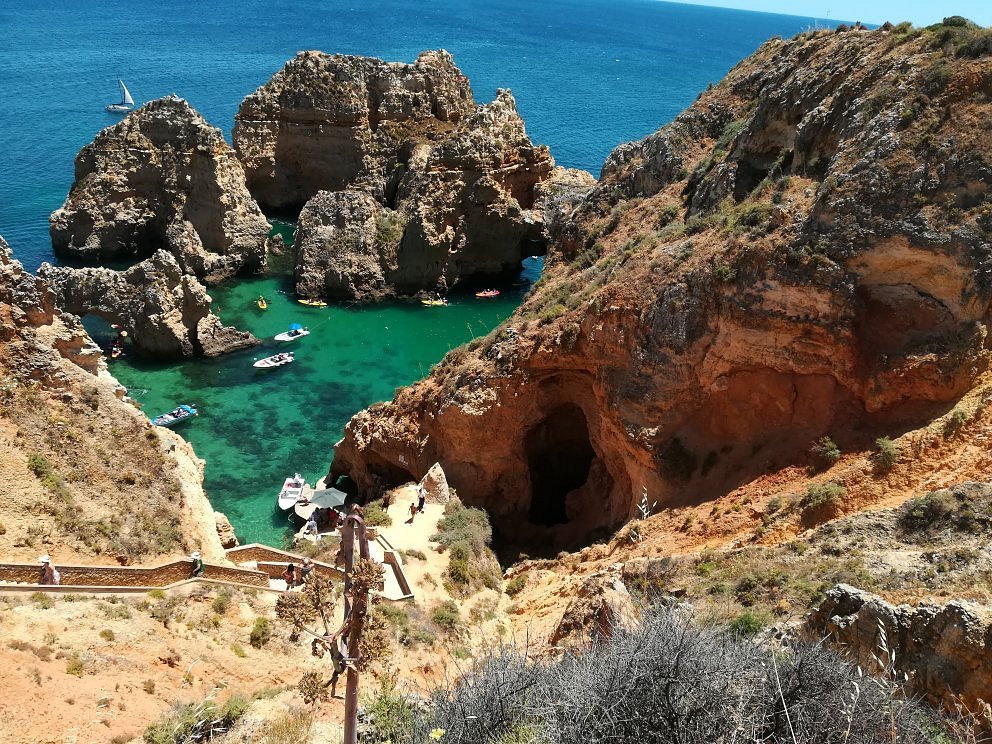
Lagos stands out as one of Portugal’s most historically significant coastal towns. Portuguese explorers launched expeditions from here during the Age of Discovery. You can still spot remnants of the old city walls and maybe wander through the fort of Ponta da Bandeira.
The real showstopper is Ponta da Piedade, just south of Lagos—a wild jumble of towering rock formations and sea caves. Golden limestone cliffs, shaped by centuries of waves, twist into arches, grottoes, and slender towers. Most bus tours pause here for photos. Seriously, bring your camera—the turquoise water against those rust-colored rocks is unreal.
Sagres feels like a different world. It clings to a windswept promontory that’s served as a strategic military point for ages. The fortress itself isn’t as grand as Silves Castle, but its spot—perched at what ancient folks once thought was the end of the world—gives it this slightly surreal, mythical vibe.
Cape St. Vicente and Atlantic Cliffs

Cape St. Vicente (Cabo de São Vicente) marks the southwestern-most tip of mainland Europe. Stand here and it’s just open ocean all the way to the Americas. The lighthouse, built in 1846, still slices through the thick Atlantic fog. On some days, the mist rolls in so quickly you can barely see your own feet.
The cliffs soar up to 75 meters, and the wind? It gets wild—hold onto your hat, seriously. There’s something humbling about being right at the edge, where Portuguese sailors once set off for the unknown.
There’s a small visitors center selling local crafts and snacks. The vendors whip up a pretty great pastel de nata (custard tart) if you need a sugar rush before heading back.
Along this stretch, the rock formations look different than in Lagos. These cliffs are darker, more rugged, with layers of sediment stacked up like a history book written in stone.
Booking, Logistics, and Customer-Friendly Policies
Most tour operators make it easy to reserve your spot on this historical adventure. Pickup is usually simple, and the cancellation terms are pretty generous—takes a lot of the stress out of planning.
Hotel Pickup and Drop-Off Details
They’ll pick you up right from your hotel or wherever you’re staying if you’re in the Albufeira area. Usually, pickup happens in the morning, but the exact time depends on your location.
Some companies will swing by nearby towns too. Just double-check your address when booking—sometimes not every hotel is on the route.
The driver brings you back to the same spot where you started. No need to hassle with parking in Silves or anywhere else. It’s a small thing, but it really makes group tours more appealing, especially in a place you don’t know well.
Free Cancellation and Flexibility
Most companies let you cancel for free up to 24 hours before your tour. A few even offer 48 hours, which is honestly pretty generous compared to other activities on Viator or similar sites.
If you cancel within the allowed window, you get a full refund. This is a lifesaver if the weather turns or your plans suddenly shift.
If something comes up and you can’t make your scheduled tour, many operators let you switch to another date without penalties. Just reach out as soon as you can.
Recommendations for Families and Groups
This tour works well for families. Kids usually find the castles and mountain views interesting enough to stay engaged. Just keep in mind—it’s a long day with limited bathroom breaks, so think about whether younger kids can manage eight hours on a bus.
Groups should book together in one go if possible. That way, you can sit together and the tour company can sort out any special requests.
The walking at each stop is manageable for most fitness levels. But if someone in your group has mobility issues, definitely mention it when booking. Silves Castle, for example, has uneven ground and stairs.
If you’re sorting out accommodations for your Algarve trip, it helps to stay somewhere with easy access to pickup points. Makes your morning a lot smoother and less frantic.
Frequently Asked Questions
Here are some questions about what you’ll actually see on a historical bus tour from Silves—think landmarks, hidden corners, and how different tour styles stack up. Plus, why this ancient Moorish capital still deserves a spot on any Algarve trip.
What historical sites can one expect to visit on a bus tour of Silves in the Algarve?
Your bus tour will almost certainly take you to Silves Castle, an 11th-century red sandstone fortress that’s honestly one of the most impressive Moorish structures left in Portugal. The walls are massive, and you can walk along the ramparts where soldiers once kept watch over the valley.
The Silves Cathedral is another guaranteed stop. Built in the 13th century on the site of a former mosque, it’s got this cool Romanesque vibe with some Gothic touches added later. The bell tower stands out in photos, for sure.
Most full-day tours head up to Monte Foia after Silves. At 902 meters, it’s the highest point in the Algarve, with views stretching all the way to the coast if the weather’s clear.
Some tours also swing through the village of Monchique, where you can check out traditional architecture and maybe sample the local medronho (that fiery arbutus berry spirit, if you’re feeling brave).
How does the hop-on hop-off experience in Albufeira compare to a structured bus tour from Silves?
Hop-on hop-off buses in Albufeira give you freedom to set your pace, but they’re really built for coastal sightseeing and beach access. It’s great if you want to linger at a beach bar or poke around a neighborhood.
A structured tour from Silves is a different animal. You’re in for a full day, set stops, and not much free time at each place.
The upside? You get much deeper into the inland Algarve’s history. Guides actually explain what you’re looking at instead of just dropping you off. And honestly, getting up to Monte Foia or the mountain villages isn’t practical on public transport or hop-on buses.
If you want to dig into the Moorish heritage and see the real countryside, the structured tour is the way to go. If beaches and flexibility are your thing, stick with hop-on in Albufeira.
Can you share some compelling reasons for including Silves in my Algarve travel itinerary?
Silves was the capital of the Algarve during Moorish rule, so you’re walking through what used to be one of the most important cities in southern Iberia. Most tourists don’t realize that—they just stick to the beaches.
The town gives you a completely different take on the Algarve. Most visitors only see the coast with its resorts and golf courses. Silves sits in the heartland, surrounded by orange groves, cork trees, and that signature red earth.
The castle alone is worth the trip, honestly. Unlike some European castles that are either ruins or overly restored, Silves Castle keeps its authentic medieval feel. You can actually walk inside the walls and picture what life was like centuries ago.
The center of town feels genuinely charming without being overrun by tourists. There are family-run restaurants serving cataplana and other regional dishes that you just won’t find in Albufeira’s resort strip.
Which bus tour offers the most comprehensive exploration of Silves’ history and landmarks?
Full-day tours that combine Silves and Monchique usually give you the most thorough experience. They typically spend 2-3 hours in Silves, so you can really explore both the castle and cathedral.
Try to find a tour with a proper guide, not just a driver. The historical context makes a big difference when you’re looking at Moorish architecture—guides point out details you’d never notice on your own.
Watch out for “historical Algarve” tours that try to cram in Lagos, Sagres, and Cape St. Vincent all in one day. They often rush through Silves in under an hour, which is just not enough if you actually want to take anything in.
Private tours give you maximum flexibility. You can linger at the castle or skip Monchique altogether if medieval fortifications are your thing.
What are the unique features of Silves that distinguish it as a historical town in the Algarve?
The red sandstone used throughout Silves is instantly recognizable. Both the castle and old buildings use this local stone, giving the place a warm, earthy color you won’t see in coastal towns.
Silves sits on the Arade River, which was navigable from the coast during Moorish times. That made it a major trading port, even though it’s inland. Most people don’t realize the geography was so different back then.
The town held onto its importance through several civilizations. The Romans settled here first, then the Moors turned it into a cultural hub (it was supposedly bigger than Lisbon at one point), and then the Portuguese took it back in 1249.
If you wander the old quarter, you’ll notice the layout is still mostly medieval—narrow, winding streets made to provide shade and confuse invaders. Modern Algarve resort towns just don’t have that kind of character.
What are the hidden gems of Silves that are often missed by conventional tours?
The archaeological museum beneath the castle barely gets a mention. You’ll find ceramics and coins from the Islamic period that make the Moorish era feel close and real. Most tours just rush past it or skip it entirely.
Under the castle, there’s this old cistern system that’s honestly pretty wild. I don’t know why more people don’t talk about it. When you stand in those cool, echoing chambers, you start to imagine how the fortress stayed alive during long sieges. The engineering is surprisingly clever for its age.
Years ago, I accidentally wandered into a cork factory just outside town. Portugal’s responsible for most of the world’s cork, so seeing the old-school harvesting and processing up close feels like discovering a secret. Standard tours? They never take you there.
Down by the river, you’ll spot a bridge called Ponte Romana (though, let’s be honest, it’s medieval, not Roman). Tourists usually walk right by without noticing. It’s quiet, peaceful—kind of a relief after the crowds at the main attractions.
On Saturdays, the local market buzzes with real life. People buy produce and fish for the week. It’s not a tourist trap, which makes it way more interesting if you want to see how folks in a Portuguese town actually live.